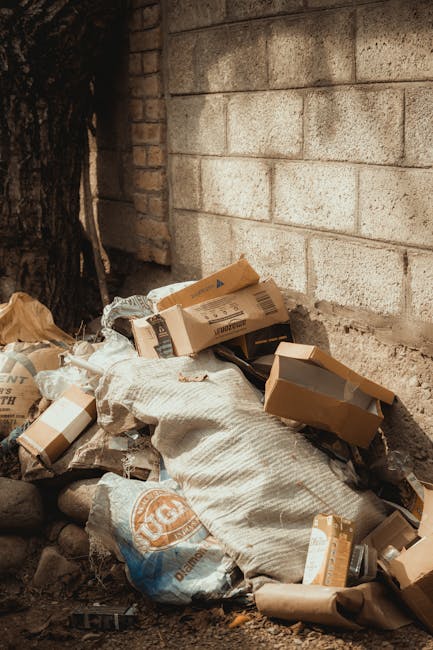
Avoid hidden rubbish removal charges in West Wickham: how to spot them, stop them, and pay a fair price
If you've ever booked rubbish removal and then felt that little stomach-drop when the invoice landed, you'll know why this matters. Hidden extras are frustrating at the best of times, and they can turn a simple clearance into a messy, expensive one. The good news is that Avoid hidden rubbish removal charges in West Wickham is not just about haggling; it's about knowing what to ask, what should be included, and which details change the final price.
In West Wickham, where people arrange everything from one-off garden clearances to full house and office clearances, the biggest money-saver is usually clarity. A proper quote should make sense before anyone lifts a bag. This guide breaks down the warning signs, the pricing traps, the questions worth asking, and the practical steps that help you keep control. No fluff, no drama. Just the useful stuff you can actually use.
Table of Contents
- Why avoiding hidden rubbish removal charges matters
- How rubbish removal pricing usually works
- Key benefits and practical advantages
- Who this is for and when it makes sense
- Step-by-step guidance
- Expert tips for better results
- Common mistakes to avoid
- Tools, resources and recommendations
- Law, compliance, standards and best practice
- Options, methods and comparison table
- Case study or real-world example
- Practical checklist
- Conclusion
- Frequently Asked Questions
Why avoiding hidden rubbish removal charges matters
Let's face it: most people don't budget for rubbish removal every week. It's usually a one-off job, often tied to a life admin moment that is already a bit stressful. Maybe you're clearing a loft, emptying a garage, or getting rid of old furniture before a move. In that situation, surprise charges feel especially unfair because you've probably already done the hard part: sorting, bagging, and deciding what goes.
Hidden charges matter for three simple reasons. First, they distort comparison. A cheap quote that grows later is not cheap. Second, they create friction on the day, which is the last thing you want when items are already at the kerb or piled in the hallway. Third, they often reveal a weak quoting process. If a company can't explain its pricing clearly, it may also be vague about loading time, access, recycling, or disposal method.
In and around West Wickham, properties vary a lot. You get tight driveways, shared access, second-floor flats, garden gates that barely swing open, and roads where a van may need to park a little way off. Small access details can affect cost. That is fair enough. What is not fair is adding vague fees after the fact without warning.
Expert summary: the safest way to avoid hidden rubbish removal charges is to get a written, itemised quote based on the actual job, confirm what access and labour are included, and ask what could change the price before booking.
How rubbish removal pricing usually works
Most rubbish removal quotes are built from a few moving parts. The exact mix varies by provider, but in practice the price usually depends on volume, weight, labour, access, and disposal type. Once you understand those pieces, the quote makes far more sense.
Volume is often the big one. If the waste fills a quarter of a van, that will usually cost less than a half-load or full-load. Some companies price by load size; others break it into clear categories. Either way, the amount of space your waste occupies is central.
Weight can matter too, especially for heavy materials such as soil, rubble, tiles, bricks, or dense mixed waste. What looks like a small pile can be surprisingly weighty. A few builders' bags of hardcore can change the economics quickly. Heavy waste often needs a different handling approach, which is why builders waste clearance is usually quoted differently from a standard household collection.
Labour covers the time and effort needed to carry items out. A clear path from the front room to the van is one thing. A fourth-floor flat with no lift, awkward stairs, and a long walk to parking is another. If a provider has to do more lifting, carrying, or sorting on site, that may be reflected in the price.
Access and parking can affect both time and practicality. A van close to the entrance usually means faster loading. If it needs to park farther away, or if items must be moved through narrow passages, the quote may change. The key is not the existence of these factors; it's whether they are explained before booking.
Waste type matters as well. A collection of old chairs, a mattress, and a broken cupboard is different from garden waste or office IT waste. For example, a mixed load from a work refurb may be more suitably handled through business waste removal, while an end-of-tenancy clear-out may be better matched to flat clearance.
Then there are disposal-related factors. If items need sorting, special handling, or routing for reuse and recycling, that can influence the quote. None of this is sneaky by itself. The issue is when it turns into an unhelpful "and there's a little extra for that" conversation on arrival.
Key benefits and practical advantages
Being proactive about pricing gives you more than just a lower bill. It also gives you a calmer process, which honestly is underrated.
- You keep control of the budget. A quote that is clear from the start is easier to approve and easier to compare.
- You reduce day-of arguments. No one wants a stand-off on the driveway about "unexpected access issues".
- You can compare like with like. Two quotes only mean something if they cover the same job.
- You avoid paying twice for the same job. This happens more often than people think when items are reclassified mid-visit.
- You get a smoother collection. Clear pricing usually goes hand in hand with clearer service planning.
There is another benefit that people miss: a transparent quote often signals a more organised operator. If a company can explain how it prices waste, what it includes, and what may alter the final cost, that usually points to decent process behind the scenes. Not always, of course, but often enough to matter.
And if you are clearing a larger property, transparency becomes even more useful. A full house clearance can involve loft items, furniture, bric-a-brac, and awkward bits from cupboards and outbuildings. When the quote is vague, the risk of add-ons rises quickly. A detailed conversation early on saves a lot of bother later.
Who this is for and when it makes sense
This advice is useful for almost anyone arranging waste collection in West Wickham, but some situations especially benefit from careful pricing.
Homeowners and landlords often need clear, one-off removals after a move, renovation, or inherited property clearance. The job can be straightforward one minute and oddly fiddly the next, particularly if there are mixed items stored in multiple rooms.
Tenants and people at the end of a tenancy need a fast, predictable service. If you're trying to leave a property tidy before inspection, you probably do not want a fee surprise the morning of handover.
Flat owners and managing agents should be alert to access costs, stair carries, lift restrictions, and shared entrance rules. A small job can become expensive if it's priced badly for the building layout.
Businesses need even tighter control. Office clearances, shop refurbishments, and routine waste collections often require fixed expectations so operations do not get interrupted. If you are managing a workspace, it may help to review office clearance and business waste removal options with the pricing details in front of you.
Garden and garage clear-outs are another common scenario. These jobs look cheap until you realise there is more volume than expected, or old soil, broken tools, and damp material make loading slower. A garden clearance or garage clearance should be discussed in a way that matches the actual items, not just the space they occupy.
Truth be told, if you are the kind of person who likes to know the numbers before anyone turns up with a van, this topic is for you.
Step-by-step guidance
Here's a practical way to avoid hidden charges without turning the whole thing into a project.
- Make a list of what needs removing. Walk through the space and write down the main items. Include large furniture, bags, loose rubbish, and anything heavy or awkward.
- Separate normal waste from specialist waste. Mixed loads, builders' rubble, electrical items, and garden debris may be treated differently. That doesn't always make them expensive, but it should be clear.
- Take a few photos. Good photos help with remote estimates. Stand back far enough to show scale and access. A close-up of one bin bag rarely tells the whole story.
- Explain access honestly. Mention stairs, parking limits, restricted entrances, or long carry distances. This is where many disputes start, and it's usually avoidable.
- Ask for an itemised quote. You want to know what is included: labour, loading, disposal, any minimum charge, and whether VAT or other fees apply if relevant.
- Confirm what would trigger a price change. Ask: what happens if the load is bigger, heavier, or more awkward than expected? A good provider should answer this plainly.
- Check the timing and cancellation terms. If plans change, you need to know whether the quote remains valid and what notice is needed.
- Get the agreement in writing. Email, text, or a booking confirmation is much better than a vague phone promise. Not glamorous, but useful.
If you are arranging a specific room or property type, it can also help to look at the service that best matches your situation. A loft with long-forgotten boxes and bulky items may point you towards loft clearance, while older furniture that needs careful handling may be better aligned with furniture clearance or furniture disposal.
Expert tips for better results
These are the small things that make a big difference. The sort of details people usually only learn after one awkward booking.
Ask what the price assumes. Does it assume ground-floor access? A certain number of items? No dismantling? No waiting time? The assumptions matter more than the headline number.
Watch for "from" pricing. It is not automatically bad, but it should be explained. "From GBPX" can be perfectly normal for variable waste volumes. It becomes a problem when there is no upper logic or no explanation of how the final amount is calculated.
Be careful with vague language. Phrases like "small surcharge may apply" or "depending on load conditions" are not always suspicious, but they should be followed by a clear example. If there is no example, ask for one.
Use photos strategically. Send images that show item size and the route out of the property. If there is a tight stairwell or shared entrance, show that too. It helps the quote match reality.
Check the company's broader standards. Pages such as pricing and quotes, insurance and safety, and recycling and sustainability can tell you a lot about how a provider thinks. You're looking for clarity, not corporate sparkle.
Say what you don't know. If you are unsure whether something is reusable, recyclable, or just plain waste, say so. Better to clarify early than discover later that the "mystery pile" needs different handling.
And yes, one very small bit of advice that sounds obvious but saves people a headache: if the quote feels too easy, slow down for thirty seconds and ask one more question. That tiny pause can save a lot.
Common mistakes to avoid
People usually do not get caught out because they are careless. They get caught out because they are busy, or tired, or just trying to get the job done quickly. Fair enough. Still, a few patterns come up again and again.
- Accepting a verbal price with no detail. A number without conditions is not much of a quote.
- Underestimating the volume. A single room can generate more rubbish than expected, especially with mixed small items.
- Forgetting access issues. Narrow stairs, basement storage, or awkward parking can all change the workload.
- Not mentioning heavy waste. Bricks, soil, tiles, and rubble behave differently from mixed household rubbish.
- Assuming "all-inclusive" means everything. Ask what is excluded. That one question is worth its weight in gold, honestly.
- Comparing quotes by price alone. A lower quote that excludes labour or disposal is not a better deal.
One real-world issue worth remembering: sometimes the "hidden charge" is not hidden at all, just not discussed. That still leaves you frustrated, of course, but the fix is the same. Get the assumptions written down.
Tools, resources and recommendations
You do not need specialist software to avoid surprise fees. A few simple tools are enough.
- Phone camera to capture the load, access route, and parking context.
- Notes app or checklist to list items by room.
- Measuring tape if you have large furniture or need to estimate fit through doors.
- Photo album or folder for quick comparison between quotes.
- Email for keeping the final booking and terms in one place.
For service planning, it can help to match the job type to the right page. If you are dealing with a decluttered home, home clearance is often the closest fit. If you are removing old furniture separately, furniture-specific services can be easier to quote accurately than a broad rubbish collection. For mixed waste, waste removal is the broader starting point.
Also, if you are looking for the company background before booking, the about us page and contact us page can help you judge how approachable and organised the business feels. Nothing fancy there, just common sense really.
Law, compliance, standards and best practice
When rubbish is collected in the UK, there are practical compliance expectations around responsible disposal, safe handling, and honest representation of services. You do not need to become a legal expert, but it does help to understand the basics.
Good practice usually means the provider should be clear about what happens to the waste, how items are handled safely, and whether any materials need special treatment. If a service claims to recycle or sort waste, that should sound credible and consistent with how the business presents itself. It should not feel like marketing theatre.
From a customer perspective, best practice is simple: ask clear questions, keep a record of the quote, and make sure the final agreement matches the job description. If a company changes the scope later, you should expect a reason that makes practical sense. If not, challenge it politely but firmly.
For jobs involving heavier materials or renovation debris, a service such as builders waste clearance should be discussed with extra care. Heavy waste can carry different handling demands, and it is better to be precise than to guess. The same goes for business premises, where timing, access, and insurance expectations can be more sensitive.
Also, useful policies such as health and safety policy and payment and security can give you a better feel for professional standards. You are not reading these for entertainment, obviously, but they can be reassuring if you are comparing providers.
Options, methods and comparison table
There are a few ways rubbish removal is usually priced or arranged. Knowing the difference helps you avoid a quote that looks good on paper but doesn't fit your actual job.
| Method | How it works | Best for | Watch out for |
|---|---|---|---|
| Load-based pricing | The price depends on how much van space the waste takes up | Mixed household waste, general clearances | Volume estimates need to be accurate |
| Job-specific quote | The provider prices the whole clearance after seeing photos or visiting | Loft, house, flat, office, or awkward access jobs | Quote should explain what is included |
| Heavy-waste pricing | Quoted separately for dense or specialist materials | Soil, rubble, builders' waste | Ask how weight and loading time affect the total |
| Room or property clearance | Quoted by the scope of the space being cleared | Whole-home or whole-office jobs | Check whether cupboards, sheds, and lofts are included |
A simple rule of thumb: the more awkward the job, the more important it is to avoid a rough estimate with no context. A quick quote for a bag of rubbish is one thing; a full property clearance is another kettle of fish.
Case study or real-world example
Imagine a West Wickham homeowner clearing a garage after years of "I'll deal with that later." There are old shelves, broken garden tools, a worn sofa, a couple of paint tins, and several bags of mixed bits and pieces. On the face of it, it sounds manageable. But the garage sits at the back of the property, there's a narrow path, and the van can't park right outside.
If the customer only says "garage rubbish," the quote may be far too loose. On arrival, the collector might discover heavier items than expected, more carrying distance, and a larger overall volume. That is exactly the kind of situation where hidden charges creep in.
Now compare that with a better approach. The customer sends a few photos, mentions the access route, names the sofa, shelves, and paint tins, and asks for the conditions that could change the price. The provider gives a clear scope and says, in plain English, what is included. On the day, there is no argument. The work gets done, the customer knows where they stand, and everyone gets on with their afternoon. Simple, really.
A similar thing happens with flats. A straightforward flat clearance can look inexpensive until stairs, parking, and lift access are factored in. A good quote anticipates that. A poor one pretends it will all sort itself out. It usually doesn't.
Practical checklist
Use this before you confirm any booking.
- Have I listed everything that needs removing?
- Have I included photos showing scale and access?
- Have I mentioned stairs, parking, narrow gates, or long carry distances?
- Do I know whether the quote is based on volume, weight, or a fixed job price?
- Have I asked what is included in the price?
- Have I asked what could change the price?
- Do I have the quote in writing?
- Have I checked whether the job is more like house clearance, waste removal, garden clearance, or furniture disposal?
- Do I know the payment terms?
- Have I kept a copy of the booking details?
If you can tick those off, you are already ahead of most people. Not glamorous, but it works.
Conclusion
Avoiding hidden rubbish removal charges in West Wickham is mostly about asking better questions early. Get the scope right, be honest about access, and insist on a clear written quote that matches the actual job. That one habit can save money, reduce stress, and make the whole process feel much calmer.
Whether you're clearing a house, flat, loft, garage, garden, or office, the principle is the same: clarity beats assumption every time. And if a quote still feels fuzzy after the second question, trust that feeling. A decent provider will not mind explaining things properly.
Get a free quote today and see how much you can save.
For more detail on service standards, pricing clarity, and the values behind the work, you may also want to review the company's pricing and quotes information alongside its recycling and sustainability approach. Little things, but they matter.
In the end, peace of mind is worth a lot. Especially when the van pulls away and the space finally feels clear again.
Frequently Asked Questions
What counts as a hidden rubbish removal charge?
It is any fee that was not clearly explained before the job started, such as an unexpected labour surcharge, access charge, extra disposal fee, or a vague minimum fee that appears later.
How can I avoid surprise costs when booking rubbish removal in West Wickham?
Give a full description of the job, share photos, mention access issues, ask for an itemised written quote, and confirm what could change the price before the team arrives.
Is a "from" price a bad sign?
Not automatically. It just means the final cost depends on the actual job. The important bit is whether the provider explains the pricing range and what affects it.
Do access issues really change the price?
Yes, they can. Stairs, long carry distances, awkward parking, and narrow entrances may increase the time and effort involved, so they should be discussed before booking.
Should I send photos before getting a quote?
Absolutely. Photos help the provider judge volume, item type, and access conditions. That usually makes the quote more accurate and reduces the chance of add-ons.
What if my waste includes heavy items like rubble or soil?
Say so early. Heavy waste often needs different handling, and it may be priced differently from mixed household rubbish.
Can I compare rubbish removal quotes fairly?
Yes, but only if the quotes cover the same scope. Check what is included, what is excluded, and whether the price assumes the same access and loading conditions.
Is a cheaper quote always the better choice?
No. A lower headline price can be misleading if it excludes labour, disposal, or access-related costs. The best quote is the one that is clear, complete, and realistic.
What should be written in the quote?
The quote should ideally show the type of waste, scope of work, price basis, any assumptions, and the conditions that could change the final amount. The clearer, the better.
Does rubbish removal need to match the type of property?
Often, yes. A flat, house, office, garage, or garden clearance each has different practical details. Matching the service to the situation helps avoid pricing errors.
What should I do if I think a charge is unfair after the job?
Stay calm, check the written quote and booking details, and ask the provider to explain the difference line by line. A good company should be able to justify any change clearly.
How do I know whether I need waste removal, house clearance, or furniture disposal?
Think about the main item type and the scale of the job. General mixed rubbish points to waste removal, whole-property jobs point to house clearance, and bulky household items may suit furniture disposal or furniture clearance.