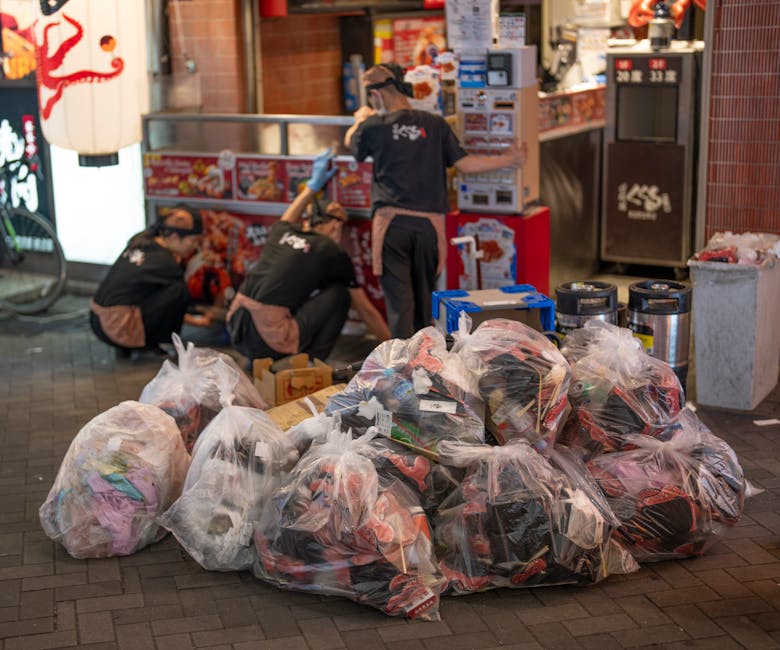
Hayes Lane rubbish pickup options for local businesses BR4

If you run a shop, office, takeaway, salon, workshop, or small site near Hayes Lane, rubbish has a way of showing up faster than you expect. One day the bins look fine; the next, cardboard is leaning against the wall, black sacks are starting to smell, and someone is asking where the extra chair actually goes. That is exactly why understanding Hayes Lane rubbish pickup options for local businesses BR4 matters. The right setup keeps your premises tidy, helps staff work without clutter, and makes it much easier to stay on the right side of local rules. It also saves a lot of last-minute stress. And let's face it, nobody wants to be dealing with overflowing waste at 7:45 on a Monday morning.
This guide walks through how local business rubbish pickup usually works in practice, what your main options are, how to choose the right approach, and which mistakes are easiest to avoid. It is written for real-world decision-making, not theory. If you need a quick answer or a more careful comparison, you should find both here.
Quick practical takeaway: if your business creates mixed waste, cardboard, old fixtures, or bulky items at irregular times, a flexible pickup service is often easier than trying to force everything into one rigid routine.
Why Hayes Lane rubbish pickup options for local businesses BR4 Matters
For local businesses, rubbish collection is not just a background task. It affects how customers see you, how safely staff can move around, and how smoothly the working day runs. On a busy stretch like Hayes Lane, that matters even more. Space is often tight, storage is limited, and deliveries can arrive at awkward times. A stack of waste bags in the wrong place can become a nuisance very quickly.
There is also a practical side that gets missed. Different business types create different waste streams. A small office may mostly deal with paper, packaging, and occasional furniture clearance. A salon might produce product packaging and general waste. A retail unit could generate large amounts of cardboard. A trades business may need recurring builders waste clearance. If you use the wrong pickup approach, you end up paying for too much capacity, too many collections, or the wrong sort of service entirely. None of that is clever. It is just expensive.
When you take a bit of time to compare options properly, the benefits show up in simple ways: tidier premises, fewer odours, less risk of blocked access, and less time your team spends managing bins instead of serving customers. That is the real story here.
One more thing. Waste arrangements are often treated as an afterthought until there is a problem. In our experience, the businesses that plan ahead usually find the whole process calmer and cheaper. Nothing dramatic. Just smoother.
How Hayes Lane rubbish pickup options for local businesses BR4 Works
Most local business waste pickups work on one of a few common models. The exact service you choose depends on how much waste you produce, how often it appears, and whether you need disposal of general rubbish, recyclable materials, bulky items, or mixed commercial waste.
Here is the general flow. First, you identify what kind of waste your business creates. Then you decide whether you need a one-off clearance, a regular collection, or a more flexible ad hoc pickup. After that, you look at access, timing, loading requirements, and whether items need to be separated before collection. Simple on paper, yes. But it gets a bit more nuanced once the site is busy.
For example, a cafe might need frequent collections for packaging, food-related waste, and broken fixtures after a refit. An office near Hayes Lane might only need occasional pickups for cardboard, monitors, or old desks. A small retail back room can fill up surprisingly fast when seasonal stock arrives in waves. That kind of variability is what makes flexible local pickup so useful.
Some providers specialise in full clearances, such as office clearance or house clearance-style removals, while others focus on specific waste categories like builders waste clearance, furniture clearance, or general waste removal. Choosing the right mix matters because not all rubbish behaves the same way. Cardboard is light but bulky. Furniture is awkward. Mixed rubbish is time-consuming. Builders waste is heavy and often needs careful handling. The right service should match the waste, not force the waste to fit the service.
It is also worth checking how collections are scheduled. Some businesses need early-morning pickups before customers arrive. Others prefer end-of-day removals so bins are not sitting around in view. If your staff have to drag everything across a cramped rear yard, you will notice the difference quickly. A good arrangement makes the whole process feel almost invisible. Almost.
Key Benefits and Practical Advantages
Choosing the right pickup option can improve day-to-day operations in ways that are easy to underestimate at first. The obvious benefit is rubbish gets removed. Fair enough. But the less obvious advantages are where the real value is.
- Cleaner presentation: customers, suppliers, and inspectors see a more organised site.
- Better use of staff time: your team spends less time moving waste around or trying to squeeze it into unsuitable bins.
- Reduced clutter: less clutter means safer walkways, fewer blocked exits, and fewer awkward storage bottlenecks.
- More flexibility: useful when business waste spikes during refurbishments, stock changes, or seasonal trade.
- Potential cost control: the right collection schedule can be more efficient than paying for oversized, unnecessary, or delayed pickups.
- Improved recycling habits: separating recyclable materials can make disposal cleaner and more manageable.
There is also a morale angle. A tidy working environment tends to feel calmer. That is not fluffy nonsense; it is just human nature. People work better when they are not side-stepping broken packaging or wondering where to put another box.
For businesses with public-facing entrances, rubbish control can affect reputation very quickly. One untidy corner, one leaking bag, one pile of flattened boxes left too long, and the message changes. Customers notice more than we like to admit.
Who This Is For and When It Makes Sense
Hayes Lane rubbish pickup options for local businesses BR4 are relevant to any organisation that produces waste beyond what a standard household bin can handle. That includes small independent traders as well as larger premises with regular commercial waste output.
Businesses that usually benefit
- Retail shops: often need cardboard, packaging, display material, and occasional broken stock removed.
- Offices: typically generate paper waste, old IT equipment, desks, chairs, and archive clearouts.
- Hospitality businesses: can need frequent removals to keep back-of-house areas manageable.
- Trades and light construction firms: often require builders waste clearance after jobs or refurbishments.
- Salons, clinics, and studios: may need regular collections for packaging, furniture, and fit-out waste.
When it makes sense to switch from ad hoc to planned pickups
If rubbish is beginning to build up in corners, if staff are making extra trips to move waste, or if you regularly have to improvise storage, it probably makes sense to move to a planned pickup arrangement. Another clue is when collections happen only after a problem appears. That "we'll sort it later" approach usually costs more in time than it saves.
It also makes sense if your business has a seasonal pattern. Many local shops and services see waste increase during busy periods, stock changes, or refurbishments. A temporary pickup arrangement can be far more practical than committing to the same routine all year.
One small but important point: if your business shares access with neighbours, landlords, or other tenants, rubbish timing matters a lot. Nobody likes stepping over cardboard at the wrong moment or finding the shared alley blocked before delivery. That sort of thing causes friction faster than you'd expect.
Step-by-Step Guidance
If you are figuring out the best option, here is a simple way to work through it without overcomplicating the job.
- List your waste types. Write down what you actually throw away in a normal week: general rubbish, cardboard, furniture, IT equipment, builders waste, broken fittings, and anything else unusual.
- Estimate volume. Think in practical terms. Is it one small bin? A couple of sacks? Several bags and bulky items? Don't guess wildly. A rough but honest estimate is enough.
- Check access. Can a team reach the waste easily? Is there a rear entrance, service yard, narrow passage, or loading point? Access can change the whole plan.
- Decide on timing. Would you rather have pickups weekly, on demand, after hours, or during quieter business periods?
- Separate what can be recycled. Cardboard, metal, wood, and some furniture items can often be handled differently from mixed waste. Separation can improve efficiency.
- Compare service types. A regular collection may suit predictable waste; a one-off clearance is often better for sudden spikes, moves, or refurbishments.
- Ask about what is included. Some services are straightforward removal jobs. Others may include loading, sorting, and responsible disposal as part of the service. Know which one you are paying for.
- Confirm expectations in writing. Even for small jobs, a written quote or clear email avoids misunderstandings later. Trust me, that tiny step saves headaches.
There is a lot to be said for keeping this process practical. The best arrangement is not the fanciest. It is the one your team can actually stick to.
Expert Tips for Better Results
Over time, a few habits make business rubbish pickup work much better. They are not glamorous. They just work.
- Create a waste point that makes sense: if staff have to walk half the building to find it, the system will drift.
- Flatten cardboard early: it takes up far less room and makes collections more efficient.
- Keep bulky items separate: chairs, shelving, counters, and similar items are easier to deal with when they are not mixed into general waste.
- Book pickups before a peak period: if you know a refurb, stock refresh, or clearout is coming, do not leave it until the room looks like a storage cupboard exploded.
- Use one person to coordinate waste: too many people "sorting it out" often means nobody is actually sorting it out.
- Keep access clear on collection day: parking, pallets, and delivery cages can slow everything down.
- Review the arrangement every few months: business waste changes. What worked in spring may be useless by autumn.
Here is a practical observation: the smaller the site, the more important planning becomes. On a tight frontage or narrow service area, even one extra bag can cause a domino effect. A tiny inconvenience, then suddenly it is all in the way. Funny how that happens.
If you want a quick internal reference point while planning waste across your premises, it can help to look at related services such as business waste removal and office clearance for different kinds of commercial waste.
Common Mistakes to Avoid
Most waste problems at business premises are not complicated. They are usually caused by a few very ordinary mistakes that build up over time.
- Choosing by price alone: the cheapest option can become expensive if it does not fit your actual waste pattern.
- Ignoring access issues: a collection that looks fine on paper may be awkward in reality if vehicles cannot park nearby.
- Mixing waste types unnecessarily: this can reduce recycling potential and make collections less efficient.
- Waiting until storage overflows: once the waste has spread into working areas, the job becomes harder and less pleasant.
- Assuming all providers handle the same materials: not every service is suitable for every item, especially larger or heavier waste.
- Forgetting seasonal spikes: many businesses need more pickup support at specific times of year and then forget to adjust.
One of the most common slip-ups is underestimating volume. A few flat-pack boxes look harmless until they multiply into a full wall of cardboard by Thursday afternoon. It's a classic. Not dramatic, just annoying.
Another mistake is failing to ask what happens after collection. Responsible disposal, sorting, and recycling practices matter, not just the act of taking waste away. A decent service should be clear about what it does with the material.
Tools, Resources and Recommendations
You do not need complicated systems to manage business waste well. Most of the time, a few simple tools and habits are enough.
- Basic waste log: a note on your phone or a shared sheet can track pickup dates, collection issues, and recurring problem items.
- Labelled bins or sacks: clear labels help staff separate cardboard, general waste, and bulky items without confusion.
- Collection calendar: useful if your business has changing hours or shared access arrangements.
- Storage plan: a designated, tidy area for waste keeps the rest of the premises free for customers and staff.
- Quote comparison: compare what is included, not just the headline price. Loading, volume limits, and item types all matter.
If your business is comparing related clearance needs, pages such as waste removal, builders waste clearance, and furniture clearance may help you narrow down the right type of service for the job.
For businesses with regular fit-outs or reorganisation work, it can also be useful to consider recycling and sustainability as part of the waste plan rather than treating it as an afterthought. That often leads to cleaner, more efficient decisions.
Law, Compliance, Standards, or Best Practice
Commercial waste handling in the UK comes with responsibilities, even for smaller businesses. You do not need to become a waste-law specialist, but you do need to make sensible choices. In practical terms, that means using a legitimate waste carrier, keeping records where needed, and ensuring rubbish is handed over responsibly. If you are unsure about what applies to your business type, it is wise to check before a clearout rather than after.
Best practice usually includes the following:
- Use a provider that can handle commercial waste properly.
- Keep waste separated where practical.
- Store waste safely and securely before pickup.
- Avoid leaving bags or bulky items where they could block access or create a hazard.
- Keep evidence of collections, invoices, or job notes for your records.
If your rubbish includes items that may need special care, such as broken furniture, old appliances, or materials from a refurbishment, make sure the service is suitable for those items specifically. A general pickup is not always enough. And honestly, assuming it is can be a costly little trap.
For companies that place a high value on safety and process, it is also worth reviewing policies such as health and safety policy and insurance and safety so you know how the provider approaches risk on site.
Options, Methods, or Comparison Table
There is no single best rubbish pickup method for every business near Hayes Lane. The right choice depends on predictability, waste type, access, and how much disruption you can tolerate.
| Option | Best for | Strengths | Limitations |
|---|---|---|---|
| Regular scheduled pickup | Businesses with steady, repeat waste | Predictable, easy to plan around, keeps sites tidy | Can be less flexible for one-off surges |
| Ad hoc collection | Occasional clearouts or seasonal waste | Flexible, useful for irregular needs | May require more coordination each time |
| One-off clearance | Moves, refits, stock changes, closures | Fast way to clear bulky or mixed waste | Not ideal for ongoing routine waste |
| Specialist waste removal | Heavy, bulky, or mixed materials | Better suited to awkward or large items | May not replace a regular collection setup |
If your business creates mostly cardboard and lightweight packaging, a simple collection arrangement may be enough. If you are dealing with old desks, counters, shelving, or mixed rubbish after a refit, a clearance-style approach is often more practical. A lot of people try to use one method for everything and end up making it harder than it needs to be. Human nature, really.
For example, a small office could manage with a routine waste plan plus the occasional flat clearance-style removal when furniture changes. A retail unit or workshop might instead need a mix of ongoing collections and periodic bulky item removal. The best answer is the one that keeps the place moving.
Case Study or Real-World Example
Picture a small business near Hayes Lane that sells homewares and gift items. During normal weeks, the waste is manageable: cardboard, wrapping, damaged stock packaging, and the odd broken display shelf. But in the run-up to a seasonal refresh, the volume doubles. Boxes arrive, old fixtures come out, and the back room starts to feel smaller by the hour.
At first, the owner tries to "just make do" for another week. That is usually where the trouble starts. Staff begin stacking flat boxes beside the doorway. A spare chair gets moved. Then a broken display stand ends up in the corner. Suddenly the storage space is gone, deliveries become awkward, and the team spends time shuffling waste instead of preparing stock.
The more workable solution is usually a short-term pickup plan: separate cardboard for easier handling, remove bulky items in one go, and then return to a lighter regular collection pattern once the rush passes. It sounds obvious, but that is often the difference between a calm week and a chaotic one. Small business life in BR4 is busy enough already.
If you are managing a broader premises project, you may find related approaches useful too, such as home clearance for mixed item removal and garage clearance when overflow storage has become part of the problem. Different settings, same underlying need: clear space without making a mess of the day.
Practical Checklist
Use this checklist before booking or updating a pickup arrangement.
- Have I identified every main type of business waste we produce?
- Do I know whether the waste is regular, seasonal, or occasional?
- Have I checked the access route for collection day?
- Have I separated recyclable materials where practical?
- Do I know if I need a one-off clearance or a recurring pickup?
- Have I checked whether bulky items or mixed materials are included?
- Is there a safe, designated place for waste storage before collection?
- Have I confirmed the timing works for staff, customers, and neighbours?
- Do I have a written quote or clear service agreement?
- Have I reviewed the arrangement recently, not just once at the start?
If you can tick most of those off, you are already ahead of many businesses. Not because the checklist is magical. It just stops the usual friction before it starts.
Conclusion
Hayes Lane rubbish pickup options for local businesses BR4 are really about one thing: making waste management fit the way your business actually operates. The best choice is not always the biggest service or the cheapest one. It is the one that keeps your site clear, your team free to work, and your collections easy to manage week after week.
For some businesses, that means a regular collection with clear sorting. For others, it means flexible clearouts during busy periods or after a refit. Either way, the goal is the same: less clutter, fewer surprises, and a more professional working environment. Simple enough. Not always easy, but simple enough.
If you are comparing options right now, take a moment to match the service to the waste, the access, and the timing. That small bit of planning tends to pay for itself quickly, and it makes day-to-day life feel lighter.
Get a free quote today and see how much you can save.
Frequently Asked Questions
What are the main Hayes Lane rubbish pickup options for local businesses BR4?
The main options are regular scheduled collections, ad hoc pickups, one-off clearances, and specialist removal for bulky or mixed waste. The best fit depends on how much waste your business creates and how predictable it is.
How do I know whether I need a regular collection or a one-off clearance?
If waste builds up every week, a regular collection is usually better. If you only have waste after occasional stock changes, office moves, or refurbishments, a one-off clearance may be more suitable.
Can small businesses near Hayes Lane use the same pickup services as larger companies?
Yes, but the service should match the scale of waste. A small shop might only need a simple arrangement, while a larger premises could need more frequent or specialist collections.
What types of business waste are commonly collected?
Common examples include general rubbish, cardboard, packaging, old furniture, office equipment, and builders waste. Some items may need special handling depending on their size or material.
Is it better to separate cardboard and recyclable waste first?
Usually yes. Separating recyclable waste can make collection easier, reduce clutter, and improve efficiency. It also helps avoid mixing lightweight recyclables with heavier general rubbish.
What should I check before booking a pickup?
Check the waste type, volume, access route, timing, and whether the service includes loading or disposal. It is also wise to ask for a clear written quote so there are no surprises.
How often should a business review its waste pickup setup?
A quick review every few months is sensible, especially if your business is seasonal or has recently changed layout, stock levels, or staffing patterns.
Can rubbish pickup help with bulky office or shop furniture?
Yes, many businesses use furniture clearance or office clearance-style services for desks, chairs, shelving, counters, and similar items. It is often the easiest route for awkward bulky waste.
Are there compliance issues I should think about?
Yes. Businesses should make sure waste is handled responsibly, stored safely, and passed to a proper provider. If you are unsure about your obligations, check before arranging disposal, especially for mixed or unusual waste.
What if my business has limited access or shared parking?
Then timing and coordination matter a lot. Collections may need to happen before opening, after closing, or during quieter periods so access is not blocked for neighbours, staff, or deliveries.
How can I avoid overpaying for rubbish pickup?
Match the service to your actual waste output, compare what is included in each quote, and avoid paying for more capacity than you need. A small amount of planning usually goes a long way.
What is the most common mistake local businesses make with waste removal?
The most common mistake is waiting until waste becomes a problem before sorting out pickup. By then, storage is tight, staff time is being wasted, and the whole job becomes more stressful than it needed to be.
Whatever your setup looks like, a sensible waste plan gives a business a bit more breathing room. And that, truth be told, can make a bigger difference than people expect.